Popular Electric Vehicles In Nepal For Tourism: Best Ev Cars For Tourist Transportation
By Nepal Tourist Vehicle 21 Aug 2026
Nepal is rapidly becoming an electric-vehicle-friendly tourism destination. From airport transfers and Kathmandu sightseeing to Pokhara road trips, luxury travel and corporate transportation, electric vehicles (EVs) are becoming an increasingly important part of Nepal's tourist transportation industry.
For tourism businesses, the attraction is clear: EVs offer quiet and comfortable travel, lower running costs, modern interiors and a cleaner transportation experience. At the same time, Nepal's EV charging network is expanding rapidly. Recent industry reporting indicates that EVs now account for around 80–85% of passenger-vehicle sales, while private operators have established more than 1,000 charging stations with approximately 1,700 charging guns.
This makes electric cars particularly interesting for airport transfers, city tours, Kathmandu–Pokhara trips, luxury transportation, family holidays and private sightseeing. or for weeding event
Why Electric Vehicles Are Becoming Popular for Tourism in Nepal
Tourists increasingly expect comfortable, reliable and environmentally responsible transportation. EVs fit this requirement particularly well.
1. Lower Operating Cost
Electric vehicles generally have lower energy and routine maintenance costs than petrol or diesel vehicles. For a tourism company operating a vehicle every day, reducing fuel and maintenance expenses can have a significant impact on annual operating costs.
2. Quiet and Comfortable Travel
One of the biggest advantages for tourists is the smooth and quiet driving experience. This is especially valuable for long sightseeing journeys where passengers spend several hours inside the vehicle.
3. Environmentally Friendly Tourism
Nepal's tourism industry is closely connected with mountains, forests, national parks and Himalayan landscapes. Using electric transportation helps tourism companies promote a more sustainable travel experience.
4. Modern Technology
Many modern EVs provide large infotainment screens, connected features, advanced driver assistance systems, comfortable seats and premium interiors. These features are attractive for international tourists and luxury travelers.
5. Growing Charging Infrastructure
Charging infrastructure is expanding beyond Kathmandu. Major tourist destinations such as Pokhara, Chitwan and other urban centres are increasingly becoming part of the EV travel network, although long-distance planning is still important. Government and industry reports also acknowledge that charging facilities remain concentrated in major cities and that infrastructure outside major routes still needs improvement.
Top Electric Vehicles for Tourism in Nepal
Not every EV is equally suitable for tourism. A tourist vehicle needs more than good battery range. Important factors include passenger comfort, luggage capacity, ground clearance, charging capability, service support and reliability.
Here are some of the most suitable EV categories and models for tourism transportation in Nepal.
| EV Model | Vehicle Type | Best For | Tourism Rating |
|---|---|---|---|
| BYD Atto 3 | SUV | Family tours, airport transfers, road trips | ⭐⭐⭐⭐⭐ |
| Tata Nexon EV | Compact SUV | General tourist transportation | ⭐⭐⭐⭐⭐ |
| MG ZS EV / MG S5 EV | SUV | Families and private tours | ⭐⭐⭐⭐⭐ |
| Hyundai Kona Electric | SUV | Premium tourist transportation | ⭐⭐⭐⭐ |
| BYD Dolphin | Hatchback | Couples, airport transfers, city tours | ⭐⭐⭐⭐ |
| BYD Seal | Premium Sedan | Luxury and executive travel | ⭐⭐⭐⭐⭐ |
| MG4 EV | Hatchback | Couples and premium city travel | ⭐⭐⭐⭐ |
| Hyundai Creta Electric | SUV | Family and premium tourism | ⭐⭐⭐⭐⭐ |
| Kia Niro EV | SUV/Crossover | Premium family tours | ⭐⭐⭐⭐ |
| Kia EV6 | Premium SUV/Crossover | Luxury tourism | ⭐⭐⭐⭐⭐ |
Exact availability, specifications and commercial rental rates can change as Nepal's EV market develops.
1. BYD Atto 3 – One of the Best EVs for Tourism in Nepal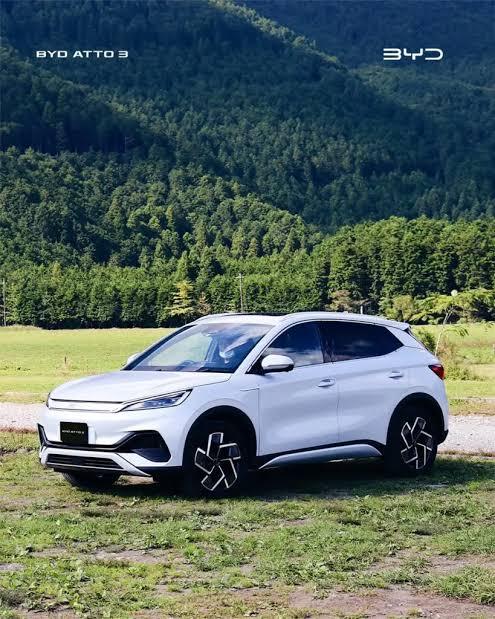
The BYD Atto 3 is one of the strongest choices for Nepal's tourist transportation sector.
Its SUV body, comfortable cabin, good luggage capacity and modern technology make it suitable for couples, families and small private groups.
It is particularly useful for:
-
Kathmandu airport transfers
-
Kathmandu sightseeing
-
Kathmandu–Pokhara trips
-
Pokhara sightseeing
-
Nagarkot and Dhulikhel tours
-
Family holidays
-
Corporate transportation
-
Private luxury tours
The Atto 3 has established a strong position in Nepal's EV market, and current market reporting continues to identify it among the country's leading electric SUVs.
Why tourists like it
The vehicle provides a combination of SUV comfort, modern technology, quiet driving and practical passenger space. For a tourism operator, it can serve multiple purposes instead of being limited to city transportation.
Best suited for: 2–4 passengers with luggage.
2. Tata Nexon EV – Practical Choice for Tourist Transportation
The Tata Nexon EV is another excellent choice for tourism businesses.
Its compact SUV design and relatively high ground clearance are particularly useful for Nepal's varied road conditions.
The Nexon EV can be used for:
-
Airport transfers
-
Kathmandu tours
-
Pokhara tours
-
Family road trips
-
Business travel
-
Hotel transfers
-
Short and medium-distance tourist routes
One major advantage is the established Tata service and parts network in Nepal, which can be important for commercial tourism operators. Current market comparisons highlight the Nexon EV's ground clearance and established service network as important strengths.
Best suited for: Budget and mid-range tourism.
3. MG ZS EV and MG S5 EV – Comfortable Family Tourism
MG has been an important name in Nepal's electric vehicle market.
The MG ZS EV became popular as a practical electric SUV, while the newer MG S5 EV represents the next generation of MG's electric SUV offering.
These vehicles are suitable for:
-
Family tours
-
Airport transportation
-
Hotel transfers
-
Kathmandu sightseeing
-
Kathmandu–Pokhara journeys
-
Corporate transportation
The spacious SUV configuration makes them more appropriate for tourism than many small city-focused EVs.
Best suited for: Families and private tourist groups.
4. Hyundai Kona Electric – Premium Korean EV Experience
The Hyundai Kona Electric is a strong option for travelers who prefer a familiar international brand.
Hyundai's reputation, modern cabin and SUV configuration make the Kona attractive for premium tourist transportation.
It can be particularly suitable for:
-
VIP airport transfers
-
Executive transportation
-
Couple tours
-
Family holidays
-
Premium Kathmandu sightseeing
-
Private road trips
For tourism operators targeting international visitors, Hyundai can also provide an advantage because the brand is widely recognized globally.
5. Hyundai Creta Electric – A Strong Family Tourism Option
The electric version of the Hyundai Creta is an interesting option for Nepal's tourism market because the Creta name is already familiar to many South Asian travelers.
Its SUV format makes it suitable for:
-
Family travel
-
Airport transfers
-
Kathmandu sightseeing
-
Pokhara tours
-
Corporate transportation
-
Premium private tours
For a tourism company looking to maintain a modern fleet, the Creta Electric can be positioned as a comfortable mid-to-premium EV option.
6. BYD Dolphin – Best for Couples and City Tours
The BYD Dolphin is smaller than the Atto 3, but that can actually be an advantage in Kathmandu.
Its compact size makes it convenient for:
-
Couples
-
Solo travelers
-
Airport transfers
-
Kathmandu Valley sightseeing
-
Short-distance tours
-
Hotel transfers
It is not the ideal vehicle for four adults with substantial trekking luggage, but for two passengers it can provide a comfortable and economical tourism solution.
Current Nepal market comparisons place the Dolphin among the popular mid-range EV choices.
7. BYD Seal – Premium Electric Sedan for Luxury Tourism
Luxury tourism is another important market for EVs.
The BYD Seal provides a premium sedan experience and can be positioned as an executive vehicle for:
-
VIP airport transfers
-
Business travelers
-
Luxury hotel guests
-
Diplomatic transportation
-
Corporate events
-
Premium private tours
For luxury tourism, the vehicle itself becomes part of the travel experience.
A tourism company can market premium EV transportation as a combination of comfort, technology, sustainability and exclusivity.
8. Kia Niro EV – Premium Family Transportation
The Kia Niro EV is another vehicle that can fit the premium tourism category.
Its crossover design provides a balance between passenger comfort and practicality.
It can be suitable for:
-
Family holidays
-
Executive travel
-
Airport transfers
-
Private sightseeing
-
Hotel transportation
-
Multi-day road trips
Kia's international reputation also makes the vehicle familiar to many foreign tourists.
9. Kia EV6 – Luxury Electric Tourism
For premium and luxury transportation, the Kia EV6 offers a much more sophisticated experience.
It is better suited to:
-
VIP transportation
-
Luxury tourism
-
Corporate guests
-
High-end hotel transfers
-
Special events
-
Premium road trips
The EV6 should not necessarily be considered a mass-market tourist vehicle. Instead, it works best as part of a luxury EV fleet.
Best EVs for Different Tourism Requirements
| Tourism Requirement | Recommended EV |
|---|---|
| Kathmandu Airport Transfer | BYD Dolphin |
| Couple's Tour | BYD Dolphin / Hyundai Kona |
| Family Tour | BYD Atto 3 / Tata Nexon EV |
| Kathmandu Sightseeing | BYD Dolphin / Atto 3 |
| Kathmandu–Pokhara | BYD Atto 3 / MG S5 EV / Nexon EV |
| Premium Tourism | Hyundai Kona / Creta EV |
| VIP Transportation | BYD Seal / Kia EV6 |
| Corporate Travel | BYD Seal / Hyundai EV |
| Budget Tourist Transportation | Tata Nexon EV |
| Luxury Tourism | Kia EV6 / BYD Seal |
EV Tourism Routes in Nepal
Electric vehicles can be especially useful on established tourism corridors where charging options and services are more accessible.
Kathmandu Valley
EVs are excellent for Kathmandu Valley sightseeing.
Popular routes include:
Kathmandu → Pashupatinath → Boudhanath → Patan → Bhaktapur → Nagarkot
For city tours, battery consumption is generally easier to manage because charging facilities are more accessible.
Kathmandu to Pokhara
Kathmandu–Pokhara is one of Nepal's most important tourist road corridors.
EVs can be used for private tourist transportation on this route, but operators should plan charging stops carefully and allow additional time for charging.
Pokhara Sightseeing
Pokhara is particularly suitable for electric tourist vehicles.
Popular destinations include:
-
Phewa Lake
-
Sarangkot
-
Davis Falls
-
Gupteshwor Cave
-
International Mountain Museum
-
World Peace Pagoda
-
Begnas Lake
An EV can provide a quiet and comfortable experience while tourists explore the city.
Kathmandu to Chitwan
The Kathmandu–Chitwan route is another potential EV tourism corridor.
Tourists can use EVs for private transfers and continue with local sightseeing around Chitwan National Park.
Kathmandu to Lumbini
For longer journeys such as Kathmandu–Lumbini, vehicle selection and charging planning become more important.
A larger-battery EV with reliable fast-charging capability is preferable for commercial tourism operations.
Are EVs Suitable for Long-Distance Tourism in Nepal?
Yes, but proper planning is essential.
Nepal's EV infrastructure is improving rapidly, but it is not yet equivalent to the charging infrastructure of developed EV markets.
A tourism operator should consider:
-
Battery capacity
-
Real-world driving range
-
Highway conditions
-
Elevation changes
-
Weather
-
Passenger and luggage weight
-
Availability of charging stations
-
Charging time
-
Alternative charging locations
-
Vehicle service support
Mountain roads, steep climbs, traffic and air-conditioning can reduce the practical range compared with manufacturer-claimed figures.
Therefore, tourism companies should avoid planning journeys based only on the maximum advertised range.
EV Charging and Tourism in Nepal
Charging infrastructure is one of the most important considerations for EV tourism.
Nepal has experienced rapid expansion of charging facilities, particularly in Kathmandu and major cities. Industry figures reported in August 2026 indicate more than 1,000 private charging stations and around 1,700 charging guns, alongside Nepal Electricity Authority charging stations.
However, charging infrastructure remains less consistent on remote routes. Government reporting has identified limited charging facilities, road conditions and shortages of skilled EV technicians as continuing challenges.
For this reason, professional tourist vehicle operators should maintain a route-specific charging plan.
Advantages of EV Tourism for Nepal
The growth of electric vehicles creates several opportunities for Nepal's tourism industry.
Lower Fleet Operating Costs
Tour operators can potentially reduce energy and routine maintenance costs compared with conventional petrol vehicles.
Better Passenger Experience
Quiet motors and smooth acceleration can make sightseeing and long-distance travel more comfortable.
Sustainable Tourism Branding
An EV fleet allows tourism companies to promote responsible and environmentally conscious travel.
Modern Tourist Experience
Technology-rich EVs can complement premium hotels, luxury tours and high-end travel packages.
Reduced Dependence on Petrol
EVs can help tourism companies reduce exposure to fluctuations in petrol and diesel prices.
Challenges of Using EVs for Tourism in Nepal
Despite the advantages, EV tourism also has challenges.
Charging Availability
Remote Himalayan destinations have significantly fewer charging options than Kathmandu and major cities.
Road Conditions
Nepal's roads vary considerably. Some highways and mountain roads can be rough, dusty and affected by monsoon landslides.
Range Planning
A vehicle's advertised range should not automatically be treated as its practical range on Nepal's highways and mountain roads.
Charging Time
Unlike refuelling a petrol vehicle, charging requires additional time, particularly when fast chargers are unavailable.
Service and Spare Parts
The rapid expansion of EV brands means service networks and trained technicians vary considerably between manufacturers.
Policy Changes
Nepal's EV market is developing rapidly, but automobile traders have recently raised concerns about policy uncertainty and infrastructure limitations.
EV vs Petrol Car for Tourist Transportation
| Feature | EV | Petrol Vehicle |
|---|---|---|
| Running Cost | Generally lower | Higher |
| Maintenance | Generally lower | Higher |
| Noise | Very quiet | More engine noise |
| Driving Comfort | Excellent | Good |
| Charging/Refuelling | Charging required | Fast refuelling |
| Long Remote Routes | Requires planning | Easier |
| City Tourism | Excellent | Good |
| Environmental Impact | Lower during operation | Higher |
| Luxury Experience | Excellent | Excellent |
| Tourism Branding | Strong sustainability appeal | Traditional |
How Tourism Companies Should Choose an EV
A tourism company should not select an EV only because it has the longest advertised range.
Instead, consider the complete tourism operation.
For 1–2 Passengers
Choose a compact EV such as the BYD Dolphin.
For Families
An SUV such as the BYD Atto 3, Tata Nexon EV, MG S5 EV or Hyundai Creta Electric is more practical.
For VIP Guests
Consider premium vehicles such as the BYD Seal or Kia EV6.
For High Daily Mileage
Choose an EV with a larger battery, reliable fast charging and strong local service support.
For Mountain Tourism
Ground clearance, tyre availability, service support and practical range can be more important than luxury features.
The Future of Electric Tourism Vehicles in Nepal
Nepal's tourism transportation sector is likely to see even greater EV adoption in the coming years.
The country's passenger EV market has expanded rapidly, with EVs representing a very large share of new passenger-vehicle imports and sales. At the same time, the market is becoming increasingly diverse, with established brands such as BYD, Tata, Hyundai, Kia and MG competing alongside a growing number of Chinese manufacturers.
This creates opportunities for tourism companies to develop specialized EV fleets.
Future tourist transportation could include:
-
Electric airport transfer fleets
-
Electric city sightseeing cars
-
Electric luxury cars
-
Electric SUVs
-
Electric tourist vans
-
Electric minibuses
-
Hotel EV fleets
-
Corporate EV transportation
-
Sustainable destination transfers
As charging infrastructure expands, EV tourism will become increasingly practical beyond the major cities.
Best Electric Vehicle for Tourism in Nepal: Our Recommendation
For most tourism operators, the BYD Atto 3 is one of the strongest all-round choices because it combines SUV practicality, passenger comfort, modern technology and broad tourism applications.
For a more budget-oriented operation, the Tata Nexon EV is a practical choice.
For premium tourism, the Hyundai Kona Electric, Hyundai Creta Electric or BYD Seal can provide a more upscale experience.
For luxury VIP transportation, the Kia EV6 or BYD Seal can be positioned as premium electric mobility.
The best choice ultimately depends on the passenger count, luggage requirements, route, charging availability and target tourism segment.
Electric Vehicle Rental in Nepal
For tourists, EV rental can be an excellent option for exploring Nepal without purchasing a vehicle.
Professional tourist transportation companies can offer EVs with experienced drivers for:
-
Kathmandu Airport Transfers
-
Kathmandu Sightseeing
-
Kathmandu–Pokhara Tours
-
Pokhara Sightseeing
-
Chitwan Tours
-
Lumbini Tours
-
Nagarkot Tours
-
Dhulikhel Tours
-
Corporate Transportation
-
Luxury Private Tours
-
Family Holidays
-
Hotel Transfers
For international travelers, EV with a professional driver is often the most convenient option because the driver can manage local roads, charging requirements and route conditions.
Final Thoughts
Electric vehicles are no longer a small niche in Nepal's automobile industry. They are becoming a major part of the country's transportation future, and tourism is one of the sectors that can benefit significantly.
The combination of lower operating costs, quiet driving, modern technology and sustainable travel makes EVs particularly attractive for Nepal's growing private-tour and luxury-tourism market.
However, EV tourism should be approached professionally. Charging infrastructure, route planning, road conditions, vehicle range, luggage capacity and after-sales service all need to be considered before selecting a vehicle.
For Kathmandu and major tourist destinations, EVs are already a practical transportation solution. As charging infrastructure and service networks continue to expand, electric vehicles are likely to become an even more important part of Nepal's tourist transportation system.
For tourism operators looking to build a modern fleet, the future of tourist transportation in Nepal is increasingly electric.
Frequently Asked Questions
Which is the best EV car for tourism in Nepal?
The BYD Atto 3 is one of the best all-round EVs for tourism because of its SUV design, passenger comfort and versatility. Tata Nexon EV, MG S5 EV and Hyundai Creta Electric are also strong alternatives.
Is an EV good for Kathmandu sightseeing?
Yes. Kathmandu Valley is one of the most suitable areas for EV tourism because charging facilities are more accessible and daily sightseeing distances are manageable.
Can I travel from Kathmandu to Pokhara in an EV?
Yes. EVs can be used for Kathmandu–Pokhara tourism, but the journey should be planned around charging availability and actual road conditions.
Which EV is best for a family tour in Nepal?
A compact or mid-size electric SUV such as the BYD Atto 3, Tata Nexon EV, MG S5 EV or Hyundai Creta Electric is generally more suitable than a small city EV.
Which EV is best for luxury tourism?
The BYD Seal and Kia EV6 are suitable options for premium and VIP transportation, depending on availability.
Are EVs cheaper to operate than petrol tourist cars?
In many operating situations, EVs can have lower energy and routine maintenance costs than petrol vehicles, although the total economics depend on the vehicle, electricity rates, route, charging access and purchase or rental cost.
Are charging stations available on Nepal's tourist routes?
Charging infrastructure has expanded rapidly, particularly around Kathmandu and major cities. However, remote routes still require careful planning, and charging availability should be confirmed before long-distance trips.
Is EV tourism environmentally friendly?
EVs produce no tailpipe emissions while driving, making them an attractive option for sustainable tourism. Their overall environmental impact also depends on electricity generation, battery production and vehicle lifecycle.
Should tourists rent an EV with a driver in Nepal?
For most international tourists, renting an EV with an experienced local driver is a convenient option, especially for multi-day road trips and routes where charging and road conditions require local knowledge.
What should I check before renting an EV in Nepal?
Check the vehicle's battery capacity, practical range, charging options along your route, luggage capacity, included kilometres, driver's experience, insurance, charging costs and emergency/service arrangements.
Nepal's tourism transportation industry is entering a new electric era—and choosing the right EV can make the journey quieter, cleaner, more comfortable and more modern.